JERUSALEM / GAZA CITY — In what diplomats are calling the most significant turning point in a generation, a comprehensive “Gaza Reconstruction and Security Accord” was formally signed on Friday, March 27, 2026. The agreement, brokered after months of grueling back-channel negotiations in Cairo and Doha, provides a definitive roadmap for the cessation of hostilities, the introduction of international peacekeepers, and a multi-billion dollar “Marshall Plan” for the war-torn enclave.
The announcement has triggered a wave of cautious optimism across the globe. For the first time since the escalation began, there is a tangible, internationally backed framework that addresses both Israel’s non-negotiable security requirements and the Palestinian people’s desperate need for governance, reconstruction, and sovereignty.
The Three Pillars of the 2026 Accord
The agreement is built upon three foundational pillars designed to prevent a return to the cycle of violence that has defined the region for decades.
1. The Multinational Security Force (MSF)
The centerpiece of the accord is the deployment of a 15,000-strong Multinational Security Force. Unlike previous UN observer missions, the MSF has a robust mandate to:
- Enforce Demilitarization: Actively identify and dismantle any remaining militant infrastructure or clandestine tunnel networks.
- Border Management: Take control of the Rafah crossing and the Philadelphi Corridor, utilizing advanced biometric and sensor technology to prevent smuggling.
- Transition of Power: Provide the security umbrella necessary for a new technocratic administration to take root without interference from armed factions.
The force will be led by a coalition of Arab nations, including Saudi Arabia, the UAE, and Jordan, with logistical and intelligence support from the United States and the European Union.
2. The Technocratic Transitional Administration (TTA)
The accord effectively ends the era of factional governance in Gaza. In its place, the Technocratic Transitional Administration (TTA) will take over for a period of 36 months.
- Composition: The TTA will consist of Palestinian professionals, engineers, and administrators who are not affiliated with any political faction or militant group.
- Mandate: Its primary focus is the restoration of basic services—water, electricity, healthcare—and the oversight of the massive reconstruction effort.
- Accountability: An international board of auditors will oversee every dollar spent to ensure that funds are used exclusively for civilian infrastructure.
3. The $50 Billion “Gaza Marshall Plan”
To ensure the long-term stability of the region, the international community has pledged a staggering $50 billion over ten years.
- Funding Sources: The lion’s share of the funding will come from the Gulf Cooperation Council (GCC), with significant contributions from the EU and private international investors.
- Economic Hubs: The plan includes the construction of a deep-water commercial port under international supervision and the creation of “special economic zones” designed to integrate Gaza into the regional supply chain.
Geopolitical Ripple Effects: A Strategic Realignment
The timing of the Gaza Accord is inseparable from the broader “Iran Peace Plan” talks currently being spearheaded by the Trump administration. Analysts suggest that the resolution of the Gaza conflict was the “missing piece” required to bring Tehran and the regional powers to a definitive settlement.
Israel’s “Conditional” Endorsement
Prime Minister Netanyahu, facing intense domestic pressure and a complex security landscape, described the accord as a “necessary step toward a new reality.” While the Israeli government remains wary of any plan that grants Palestinian sovereignty, the promise of a demilitarized Gaza managed by Arab allies provides the security guarantees that Israeli military leadership has long sought.
“The era of the ‘Gaza front’ is over,” a senior IDF official stated. “Our focus now shifts to ensuring the total compliance of the MSF and the permanent neutralization of threats.”
The Arab World’s New Role
For Saudi Arabia and the UAE, the accord represents a bold step toward regional leadership. By putting “boots on the ground” and billions of dollars on the line, the Gulf monarchies are signaling their intent to manage Middle Eastern affairs without relying solely on Western intervention. This proactive stance is seen as a direct counter to Iranian influence and a move to protect the regional energy markets, which have been plagued by volatility.
The Humanitarian Reality: Rebuilding from the Rubble
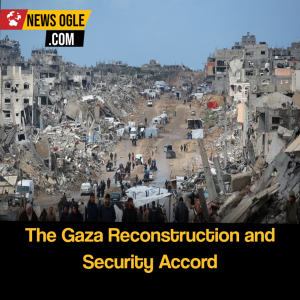
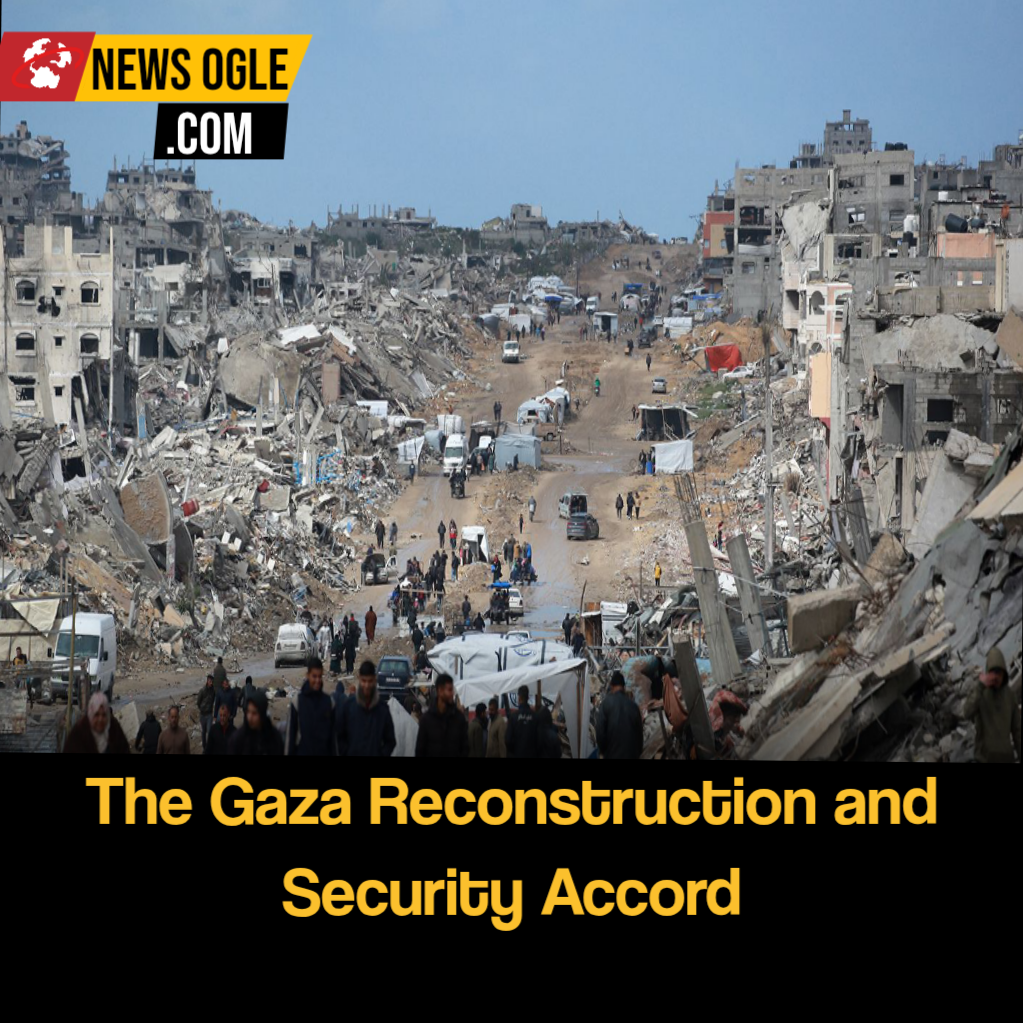
While the political ink is dry, the physical task of rebuilding Gaza is Herculean. UN Habitat estimates that over 70% of Gaza’s housing units have been damaged or destroyed.
- De-mining Operations: The MSF’s first task will be the clearance of unexploded ordnance, a process expected to take at least six months before major construction can begin.
- The Health Crisis: With only a handful of hospitals partially functional, the accord prioritizes the establishment of “Field Hospital Cities” to treat the thousands of civilians suffering from long-term injuries and chronic illness.
- Education: A new curriculum, focused on vocational training and regional integration, is being developed under the guidance of the TTA to replace the war-time educational gap.
Market Response: Oil and the “Peace Dividend”
Global financial markets reacted with a “relief rally” following the signing of the accord.
- Oil Prices: Brent crude, which has been volatile due to the “chokehold” on regional supplies, saw a stabilizing trend, dropping to $78 per barrel on the news.
- Regional Investment: Stock markets in Riyadh, Abu Dhabi, and Tel Aviv all saw gains, reflecting investor confidence in a more stable Middle Eastern trade environment.
Financial analysts are calling this the “Peace Dividend,” suggesting that the end of the Gaza conflict could unlock hundreds of billions in dormant capital for regional infrastructure projects, including the ambitious Neom-to-Haifa railway link.
Challenges and the Road Ahead
Despite the historic nature of the agreement, significant hurdles remain.
- Spoilers: Radical elements on both sides remain opposed to the accord. The MSF will need to prove its ability to suppress insurgent activities without triggering a new humanitarian crisis.
- Sustained Funding: In a world of competing crises, maintaining the $50 billion commitment over a decade will require unprecedented international coordination.
- The Final Status Question: The accord purposefully leaves the question of “Two-State” vs. “Confederation” for the end of the 36-month transition, a delay that some critics argue merely kicks the political can down the road.
Conclusion
The March 27 Gaza Accord is more than just a ceasefire; it is a blueprint for a new Middle East. By combining rigid security measures with a transformative economic vision, the international community is betting that prosperity and stability can finally replace the decades of despair.
As the first units of the Multinational Security Force prepare to enter Gaza, the eyes of the world are watching. The “Art of the Deal” in 2026 has produced a framework that few thought possible—a chance for Gaza to rise from the ashes and for the region to find a lasting, albeit fragile, peace.
Summary of the Gaza Accord (March 2026)
| Feature | Details |
| Security | 15,000 Arab-led peacekeepers (MSF) with a mandate for demilitarization |
| Governance | 36-month Technocratic Transitional Administration (TTA) of Palestinian professionals |
| Reconstruction | $50 Billion fund over 10 years; new port and special economic zones |
| Monitoring | 24/7 international surveillance of borders and tunnel corridors |
| Regional Context | Linked to broader Iran peace talks and Saudi-Israel normalization |

Aleda Kawis is the Professional Journalist and serving in the field since 2012. She keeps extensive experience as investigating journalist and media influencer.