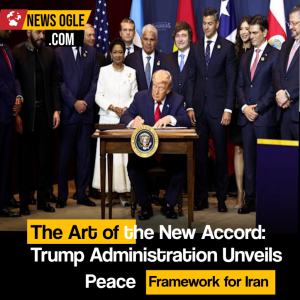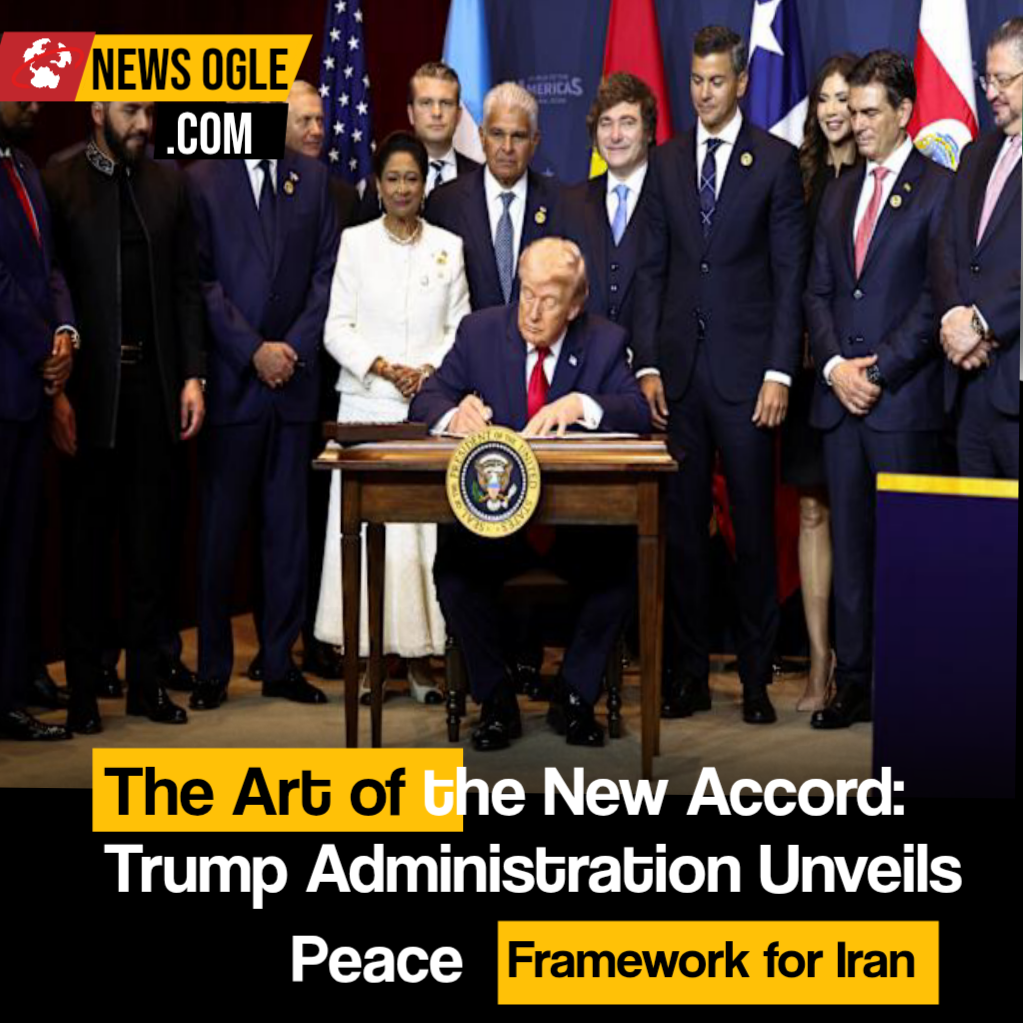
WASHINGTON D.C. — In a move that has sent shockwaves through the corridors of power from Brussels to Beijing, the Trump administration officially unveiled its comprehensive “Framework for Regional Stability and Nuclear Reciprocity” with Iran on Wednesday. The proposal, a high-stakes pivot from the “Maximum Pressure” campaign of the first term to a “Grand Bargain” strategy in the second, aims to fundamentally reset the geopolitical alignment of the Middle East by the end of 2026.
As reported by the New York Times, the 48-page document marks the most significant shift in American foreign policy since the inauguration of the 47th President. The plan seeks to balance aggressive security demands with unprecedented economic incentives, offering Tehran a path out of international isolation in exchange for the total dismantling of its ballistic missile program and a permanent cessation of its regional proxy activities.
The Architecture of the Deal: A Three-Pillar Approach
The Trump administration’s peace plan is built upon three non-negotiable pillars designed to address long-standing grievances while providing a “golden bridge” for the Iranian leadership to cross.
1. The Nuclear and Ballistic Lockdown
Unlike the 2015 JCPOA, which focused primarily on enrichment levels, the 2026 framework demands a “Permanent and Verifiable” end to all nuclear aspirations. This includes:
- Intrusive Inspections: 24/7 access for IAEA inspectors to any site in Iran, including military installations, without prior notice.
- The Missile Clause: A total ban on the development and testing of missiles with a range exceeding 300 kilometers, effectively neutralizing Iran’s ability to strike deep into Europe or regional adversaries.
2. Regional Disengagement and the “Proxy Sunset”
The second pillar targets Iran’s influence in Lebanon, Yemen, Syria, and Iraq. The administration has proposed a “Proxy Sunset” clause, requiring Tehran to withdraw financial and military support for non-state actors within a 12-month window. In exchange, the U.S. offers to broker a regional non-aggression pact between Iran and the members of the expanded Abraham Accords.
3. The Economic Transformation Fund
In a classic “Art of the Deal” maneuver, the plan dangles a massive “carrot.” Should Iran comply, the U.S. is prepared to lead an international consortium—including private sector giants from the West and the Gulf—to create a $150 Billion Economic Reconstruction Fund. This fund would be dedicated to modernizing Iran’s crumbling energy infrastructure, stabilizing its currency, and integrating its markets into the global financial system.
Domestic Reactions: A Divided Washington
The unveiling of the plan has ignited a firestorm on Capitol Hill, reflecting the deep polarization of American politics in 2026.
- The Republican Consensus: Supporters of the President argue that this is the only way to prevent a full-scale regional war. “We are approaching Iran from a position of absolute strength,” noted a high-ranking member of the Senate Foreign Relations Committee. “The President is giving them a choice: total prosperity or total irrelevance.”
- Democratic Skepticism: Opposition leaders have voiced concerns that the plan is “too good to be true” and potentially rewards a regime that has spent years destabilizing the region. Critics point out that the 12-month window for proxy withdrawal is “dangerously optimistic” and lacks a clear mechanism for verification beyond the nuclear sector.
Geopolitical Ripple Effects: Israel and the Gulf
International reaction has been a mixture of cautious optimism and strategic anxiety.
The Israeli Stance
In Jerusalem, the reaction has been characteristically guarded. Prime Minister Netanyahu’s government has emphasized that while it welcomes any plan that truly neutralizes the Iranian threat, “freedom of action” remains a cornerstone of Israeli security policy. Military analysts in Tel Aviv are closely scrutinizing the “Missile Clause,” questioning whether a paper agreement can truly stop the technological advancements Iran has already made.
The Saudi-UAE Perspective
Riyadh and Abu Dhabi see the plan as a potential opportunity to de-escalate the regional arms race. With the global energy market currently experiencing historic supply disruptions (as noted in recent IEA reports), the Gulf monarchies are eager for a stable environment that allows for uninterrupted oil and gas flows. The prospect of Iran becoming a legitimate economic partner, rather than a regional pariah, offers a path toward the ambitious economic diversification goals of the region.
The Iranian Dilemma: Survival vs. Ideology
For the leadership in Tehran, the Trump peace plan presents an existential crossroads. The Iranian economy has been pushed to the brink by years of sanctions, internal unrest, and the high cost of maintaining regional proxies.
Sources within the Iranian foreign ministry suggest that while the hardliners view the “Intrusive Inspections” as a violation of sovereignty, the pragmatic wing of the government sees the $150 billion fund as a lifeline. The Supreme Leader faces a daunting choice: maintain the ideological purity of the Islamic Revolution at the risk of total economic collapse, or accept a Western-brokered peace that ensures the survival of the state but fundamentally alters its identity.
Market Implications: A Volatile Response
The announcement had an immediate impact on global commodities. Crude oil prices, which have been hovering at record highs due to recent Middle East tensions, saw a sharp but brief 8% drop on the news of the talks. However, analysts warn that until a signature is on the dotted line, the “risk premium” remains high.
Investors are keeping a close eye on:
- Shipping Security: Will the plan lead to an immediate easing of the “chokehold” on the Strait of Hormuz?
- Sanctions Relief Timeline: How quickly could Iranian crude return to the global market?
- Global Supply Chains: Could a stabilized Iran become a new hub for manufacturing and logistics between East and West?
Conclusion: The Road to the “Grand Bargain”
The March 25th announcement is not the end of the journey, but the beginning of what promises to be an arduous and volatile negotiation process. President Trump’s willingness to disrupt traditional diplomatic norms has brought the world to a unique juncture.
Whether this plan results in a historic “Grand Bargain” that reshapes the 21st century or becomes another entry in the long list of failed Middle East peace initiatives depends on the ability of all parties to navigate the deep-seated mistrust that has defined the last four decades.
Summary Table: Key Features of the 2026 Iran Peace Plan
| Feature | Requirement / Offer |
| Nuclear Status | Total and permanent cessation of enrichment beyond 3.67% |
| Ballistic Missiles | Cap on range at 300km; destruction of long-range stockpiles |
| Proxy Warfare | Complete withdrawal of funding for Hezbollah, Houthis, and militias |
| Economic Incentive | $150 Billion Reconstruction Fund and lifting of all secondary sanctions |
| Diplomatic Status | Potential restoration of diplomatic ties and regional non-aggression pact |

Aleda Kawis is the Professional Journalist and serving in the field since 2012. She keeps extensive experience as investigating journalist and media influencer.